Learning Science & Cognitive Development
**Contains affiliate links that support the work at CultivatED Colorado**

Drive
Drawing on four decades of scientific research on human motivation, Pink exposes the mismatch between what science knows and what business does—and how that affects every aspect of life. He examines the three elements of true motivation—autonomy, mastery, and purpose-and offers smart and surprising techniques for putting these into action in a unique book that will change how we think and transform how we live.


Grit
The daughter of a scientist who frequently noted her lack of “genius,” Angela Duckworth is now a celebrated researcher and professor. It was her early eye-opening stints in teaching, business consulting, and neuroscience that led to her hypothesis about what really drives success: not genius, but a unique combination of passion and long-term perseverance.


The Art of the Changing Brain
Neuroscience tells us that the products of the mind--thought, emotions, artistic creation--are the result of the interactions of the biological brain with our senses and the physical world: in short, that thinking and learning are the products of a biological process.This realization, that learning actually alters the brain by changing the number and strength of synapses, offers a powerful foundation for rethinking teaching practice and one's philosophy of teaching.

Mathematical Mindsets
Mathematical Mindsets provides practical strategies and activities to help teachers and parents show all children, even those who are convinced that they are bad at math, that they can enjoy and succeed in math. Jo Boaler—Stanford researcher, professor of math education, and expert on math learning—has studied why students don't like math and often fail in math classes. She's followed thousands of students through middle and high schools to study how they learn and to find the most effective ways to unleash the math potential in all students.

How We Learn
The human brain is an extraordinary learning machine. Its ability to reprogram itself is unparalleled, and it remains the best source of inspiration for recent developments in artificial intelligence. But how do we learn? What innate biological foundations underlie our ability to acquire new information, and what principles modulate their efficiency?

Proust and the Squid
How do people learn to read and write—and how has the development of these skills transformed the brain and the world itself ? Neuropsychologist and child development expert Maryann Wolf answers these questions in this ambitious and provocative book that chronicles the remarkable journey of written language not only throughout our evolution but also over the course of a single child’s life, showing why a growing percentage have difficulty mastering these abilities.
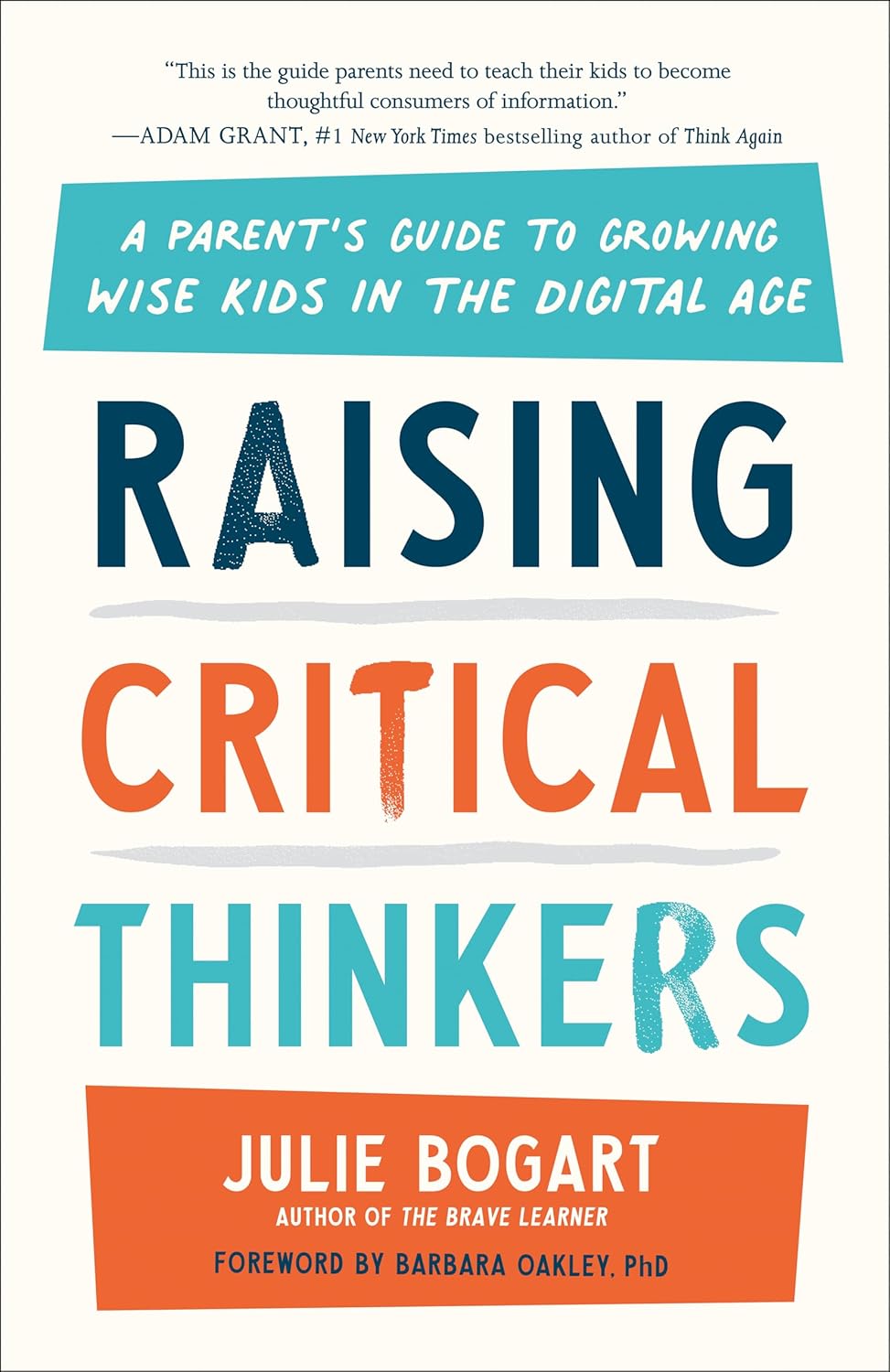
Raising Critical Thinkers
Education is not solely about acquiring information and skills across subject areas, but also about understanding how and why we believe what we do. At a time when online media has created a virtual firehose of information and opinions, parents and teachers worry how students will interpret what they read and see. Amid the noise, it has become increasingly important to examine different perspectives with both curiosity and discernment. But how do parents teach these skills to their children?

Creating Innovators
Harvard education expert Tony Wagner explores what parents, teachers, and employers must do to develop the capacities of young people to become innovators. In profiling compelling young American innovators such as Kirk Phelps, product manager for Apple’s first iPhone, and Jodie Wu, who founded a company that builds bicycle-powered maize shellers in Tanzania, Wagner reveals how the adults in their lives nurtured their creativity and sparked their imaginations, while teaching them to learn from failures and persevere. Play, passion, and purpose: These are the forces that drive young innovators.